
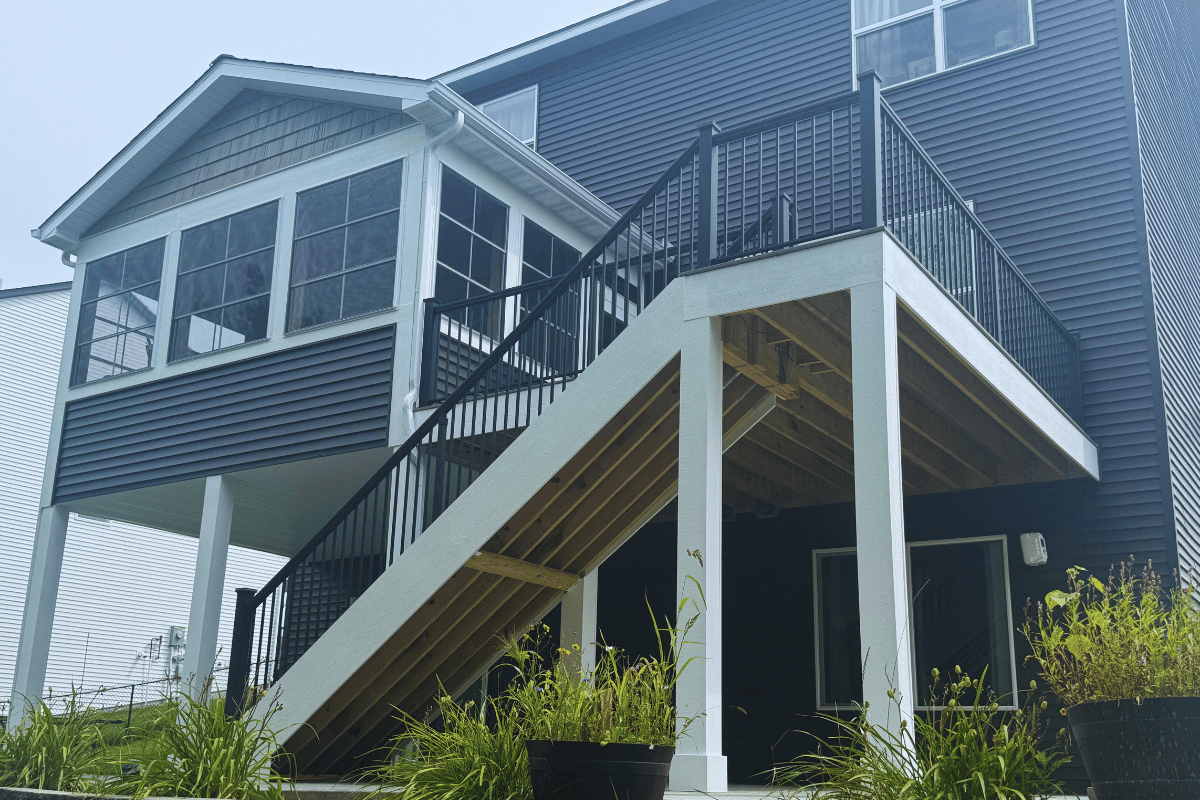
A porch can completely change the way you enjoy your home. It creates a comfortable place to relax, gather with family, entertain friends, or enjoy the outdoors without feeling fully exposed to the weather.
For many Minnesota homeowners, two of the most common options are a screened porch and a four-season porch. But there is another option that we see many Minnesotans taking advantage of and that is a 3+ season porch. All three of these options can add comfort, function, and value to the home, but they are designed for different uses.
If you are planning a porch project, understanding the differences between a screened porch, a 3+ season porch, and a four-season porch can help you choose the option that best fits your home, your budget, and the way you want to use the space.
What Is a Screened Porch?
A screened porch is an outdoor living space that is covered and enclosed with screens. It allows fresh air to move through the space while helping protect against bugs, leaves, and some weather exposure.
For Minnesota homeowners, a screened porch can make the outdoor season much more comfortable. It gives you a place to enjoy summer evenings, morning coffee, family meals, and quiet time outside without dealing with mosquitoes or direct sun.
A screened porch usually feels more connected to the outdoors than a fully enclosed room. You still hear the sounds of the neighborhood, feel the breeze, and experience the season, but with more comfort and protection than an open deck.
For homeowners who love being outside but want a more comfortable space, a screened porch can be a strong option. It is often used for outdoor dining, reading, relaxing, entertaining, and enjoying fresh air during spring, summer, and fall.
What Is a 3+ Season Porch?
A 3+ season porch sits between a traditional screened porch and a fully insulated four-season room. Instead of screens alone, it uses vinyl combination porch windows that help keep out wind, rain, dust, and pollen while still maintaining the feel of an outdoor living space.
Because the room stays protected from the weather, homeowners may also be able to use flooring such as LVP and add supplemental heat through options like in-floor heat, a fireplace, or infrared heaters. These windows do not provide the same insulation or R-value as standard glass windows in a four-season room, but they can help retain some heat and extend the usable porch season further into spring and fall. Typically there will be insulation in the floor and ceiling areas to help keep the cold out and the heat in making it a comfortable room on chilly mornings or cool evenings. Many of our clients who have selected this option tell us they use the room all year except for a few weeks in the winter.
For many Minnesota homeowners, a 3+ season porch offers a practical balance between the open-air feel of a screened porch and the year-round comfort of a four-season porch.
What Is a Four-Season Porch?
A four-season porch is a more enclosed and insulated space designed for extended use throughout the year. It usually includes windows, insulation, a more finished interior, and heating or cooling considerations depending on the project.
Unlike a screened porch, a four-season porch is intended to feel more like part of the home. It provides more protection from Minnesota weather and can often be used during colder months when a screened porch would be too cold.
A four-season porch may be a good fit for homeowners who want additional living space, more natural light, and a stronger connection to the outdoors without giving up comfort during winter. It can work well as a sitting room, dining area, reading space, home office, or relaxed family gathering area.
A four-season porch is typically a larger investment than a screened porch because it involves more materials, insulation, windows, structural planning, and interior finishing.
The right choice depends on how much of the year you want to use the space.
Screened Porch Benefits for Minnesota Homes
A screened porch is especially appealing during spring, summer, and fall.
Minnesota homeowners often want to enjoy the outdoors without dealing with mosquitoes, direct sun, light rain, or wind. A screened porch creates a more comfortable outdoor space while still feeling casual and open.
It can also work well alongside a deck. Many homeowners choose to combine a screened porch with an open deck area so they have both protected seating and open-air space for grilling, dining, or sun exposure.
This combination can create a flexible outdoor living layout that works for different parts of the day and different types of weather.
3+ Season Porch Benefits for Minnesota Homes
A 3+ season porch can be a strong fit for homeowners who want more weather protection and a longer usable season without creating a fully conditioned four-season room. The vinyl combination windows help block wind, rain, dust, and pollen, while optional supplemental heat and insulation can make the space comfortable on chilly mornings and cool evenings. It keeps much of the outdoor-living feel of a screened porch while giving homeowners more flexibility through Minnesota’s changing seasons.
Four-Season Porch Benefits for Minnesota Homes
A four-season porch is designed for homeowners who want more year-round comfort.
Minnesota winters can be long, and a four-season porch allows you to enjoy natural light, backyard views, and additional living space even when the weather is cold.
A four-season porch can feel like a natural extension of the home when it is designed well. It should match the architecture, flow, and function of the existing house rather than feeling like an afterthought.
This is especially important for Minnesota homes where exterior additions need to perform through changing seasons.
Which Option Costs More?
In most cases, a four-season porch costs more than a screened porch, with a 3+ season porch generally falling between the two depending on the design and features selected.
That is because a four-season porch usually requires more structural planning, insulation, windows, heating and cooling considerations, electrical work, interior finishes, and weather protection. A screened porch is typically simpler because it does not need to function like a fully conditioned living space. A 3+ season porch can include additional insulation, vinyl combination windows, upgraded flooring, and supplemental heat, so its cost will depend on which of those features are included.
However, cost depends on the specific design.
A large custom screened porch with premium finishes, a fireplace, special railings, or a connected deck may cost more than a smaller, simpler four-season porch. Size, materials, access, roof design, foundation needs, and finishing details all influence the final investment.
Instead of choosing based on price alone, homeowners should think about how they want to use the space.
If you mainly want a bug-free outdoor area for spring, summer, and fall, a screened porch may be the better fit. If you want more protection from the weather and the ability to extend the season without creating a fully conditioned room, a 3+ season porch may be the right balance. If you want a room that feels usable during winter, a four-season porch may be worth the additional investment.
How Minnesota Weather Affects the Decision
Minnesota weather should play a major role in porch planning.
A screened porch can be excellent during warmer months, but it will still feel like an outdoor space. It may not be comfortable during cold weather, snow, or freezing temperatures unless additional seasonal features are included.
A 3+ season porch provides more protection than a screened porch by using vinyl combination windows and typically adding insulation in the floor and ceiling. Supplemental heat can make it comfortable deeper into spring and fall and, depending on the weather and design, for much of the year.
A four-season porch is designed to provide more protection and comfort during colder months. It creates a more insulated barrier between the outdoor environment and the living space.
When comparing options, think about how many months you want to use the space, how exposed the porch will be to wind and sun, whether bugs are a major concern, and whether winter use matters. The way the porch connects to the rest of the home also matters, especially if you want the finished space to feel like a natural part of the house.
The right porch should match both the home and the climate.
Design Matters for Both Options
Whether you choose a screened porch, a 3+ season porch, or a four-season porch, design matters.
A porch should look like it belongs with the home. Rooflines, windows, screens, railings, doors, siding, trim, and interior finishes all affect how natural the finished space feels.
A poorly planned porch can feel disconnected from the house. A well-designed porch should feel like it was always meant to be there.
The design process should also consider how the porch will be used every day. Do you want room for a dining table? Comfortable chairs? A connection to the deck? Views of the backyard? Privacy from neighbors? Easy access from the kitchen or living room?
Answering these questions early helps create a porch that feels good to use, not just good to look at. At dREamodel, porch projects are designed à la carte around each homeowner’s needs, wants, and priorities rather than using a one-size-fits-all approach.
Screened Porch, 3+ Season Porch, or Four-Season Porch: Which Is Right for You?
A screened porch may be the better choice if you want a fresh-air outdoor room, bug protection during warmer months, a covered place for relaxing or dining, and a strong connection to the backyard.
A 3+ season porch may be the better choice if you want to keep the feel of an outdoor living space while gaining more protection from wind, rain, dust, and pollen, along with the option for insulation and supplemental heat to extend the season.
A four-season porch may be the better choice if you want a room you can use more of the year, additional finished living space, more protection from cold and wind, large windows, and a space that feels more connected to the inside of the home.
There is no single right answer for every home.
Some homeowners want the fresh-air feeling of a screened porch. Others want the balance of weather protection and outdoor living offered by a 3+ season porch. Others want the comfort and extended use of a four-season porch. Some projects combine a porch with a deck to create multiple outdoor living zones.
The best choice depends on your home, your property, and how you want to live in the space.
Think About How You’ll Use the Porch
Before choosing between a screened porch, a 3+ season porch, and a four-season porch, think through your daily habits.
Do you want to drink coffee outside in the morning? Host dinners in the evening? Watch the kids play in the yard? Create a quiet room with natural light? Use the space during winter? Keep bugs away during summer nights?
The way you plan to use the porch should guide the design.
A porch that looks beautiful but does not fit your lifestyle will not get used as much as it should. The most successful porch projects are built around real routines, real priorities, and the way the homeowner wants to enjoy the home.
Build the Right Porch for Your Minnesota Home
Any of the above styles of porches can be excellent options for Minnesota homeowners. The best choice depends on how much of the year you want to use the space, how protected you want it to feel, and how closely you want it to connect with the rest of your home.
At dREamodel, we help homeowners design and build custom porches that fit Minnesota weather, local home styles, and everyday life. Whether you are considering a screened porch, a 3+ season porch, a four-season porch, or a deck and porch combination, our team can help you compare options and design a project specifically around your needs, wants, and priorities. There is no one-size-fits-all approach to our design process.
Once the design is established, our team handles the planning, permitting, construction, cleanup, and details throughout the project. We clearly lay out the project timeline once we know what is involved so you can focus on selecting products, participating in the design, and watching the project come to life. Choosing a top-quality contractor means you should not have to manage every detail yourself; our goal is to make the experience seamless, low-stress, and exciting from start to finish.